


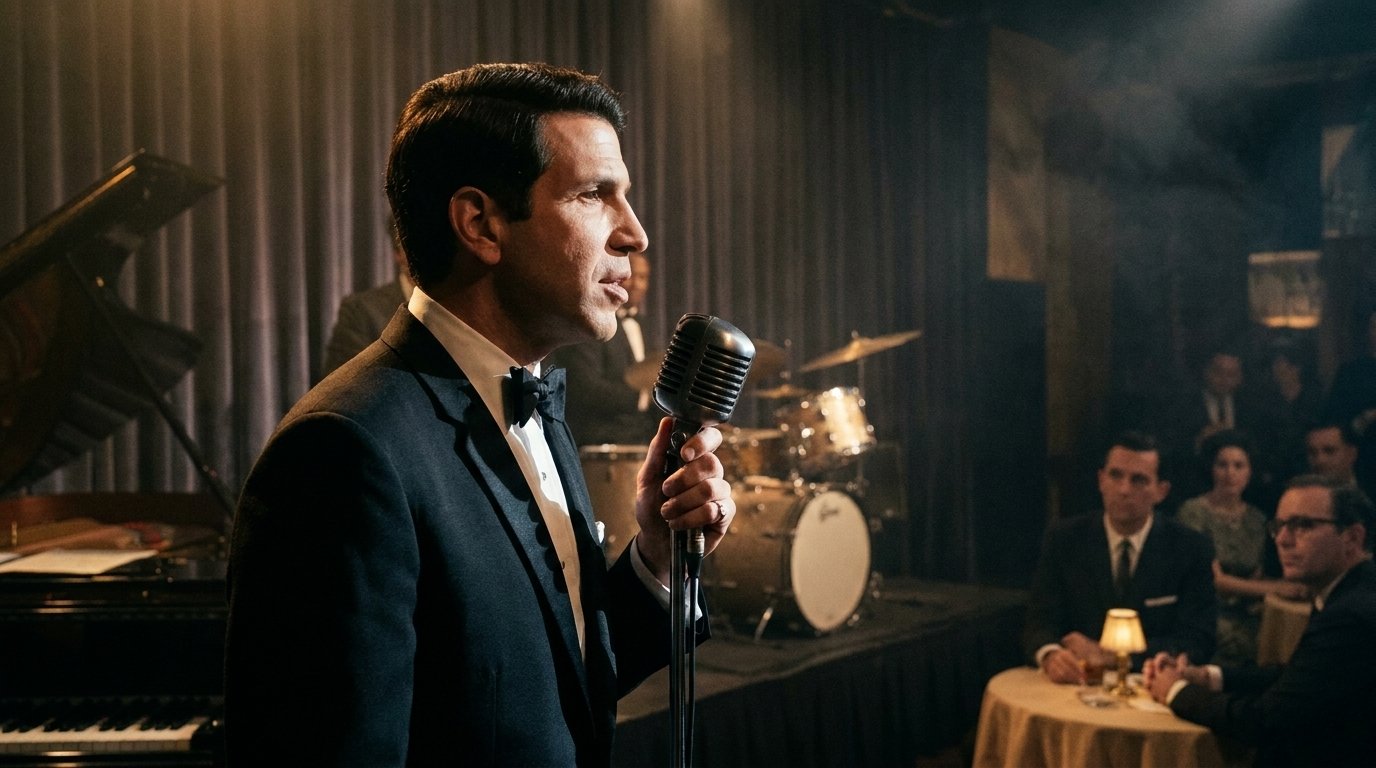
Frank Sinatra Jr. was an American singer, songwriter, conductor, and actor who spent his whole career working in the shadow of one of the most famous entertainers in history. Many people first hear his name in connection with the 1963 kidnapping, but he also built a career of more than fifty years on big band stages, on television, and on the podium as the conductor of his own father’s orchestra.
This guide brings together what is publicly confirmed about his life, from his childhood and music to his death in 2016. It also sorts out several confusing claims that appear on lower-quality websites, including wrong dates, invented causes of death, and net worth figures that differ by tens of millions of dollars.
Quick Facts About Frank Sinatra Jr.
| Detail | What is confirmed |
|---|---|
| Birth name | Francis Wayne Sinatra |
| Born | January 10, 1944, in Jersey City, New Jersey |
| Died | March 16, 2016, in Daytona Beach, Florida (aged 72) |
| Parents | Singer and actor Frank Sinatra and Nancy Barbato Sinatra |
| Siblings | Nancy Sinatra (older sister) and Tina Sinatra (younger sister) |
| Work | Singer, songwriter, conductor, and actor |
| Years active | 1963 to 2016 |
| Marriage | Cynthia McMurry (married October 18, 1998; divorced January 7, 2000) |
| Acknowledged child | One son, Michael |
| Best-known live show | “Sinatra Sings Sinatra” |
Early Life and Family Background
He grew up in a household where music was everywhere but his father was rarely home. Because the elder Sinatra was constantly touring or making films, the boy usually watched him from a distance, although he later recalled seeing many of the era’s top performers, including Dean Martin and Sammy Davis Jr., at work. He said from an early age that he wanted to become a pianist and songwriter.
Despite the name, he was not technically a “junior.” His father’s full name was Francis Albert Sinatra, while the son was Francis Wayne, yet the public and the family called him Frank Jr. for his entire life. By his early teens he was already performing in local clubs, and he later learned a great deal about the music business by spending time with Duke Ellington.

The 1963 Kidnapping of Frank Sinatra Jr.
On the evening of December 8, 1963, the 19-year-old singer was in the middle of an engagement at Harrah’s Club Lodge in Lake Tahoe, just days after the assassination of President John F. Kennedy. According to the FBI’s own history of the case, two men, Barry Keenan and Joe Amsler, entered his room, taped up a friend who was with him, blindfolded the young singer, and led him out a side door to a waiting car. Both kidnappers were 23 and had been schoolmates of Nancy Sinatra. Earlier accounts say they had tried and failed to carry out the plan before, and that the cancelled shows after the Kennedy assassination had disrupted one attempt.
He was driven to a hideout in Canoga Park, California, while a third man, John Irwin, handled the phone calls to the elder Sinatra, who had flown to Reno to wait with FBI agents. The FBI advised the family to wait for a ransom demand, pay it, and then try to trace the money. The kidnappers asked for $240,000, and although his father reportedly offered far more, the kidnappers declined the larger amount. The younger Sinatra was released about two days after he was taken.
The three men were arrested soon afterward, convicted of kidnapping, and most of the ransom was recovered. Accounts differ on some details of the sentences and on which defendant was ruled legally insane, so readers who need exact legal facts should check court records rather than relying on a single retelling. Keenan later said in a public interview that he had originally hoped to repay the money over time, a claim that is difficult to verify. The case was later dramatized in the 2003 film Stealing Sinatra.
Music Career: From Big Bands to Reprise Records
His professional life began on the road. At 19 he became a vocalist for bandleader Sam Donahue, and by 1968 he had reportedly performed in 47 states and 30 countries, appeared on television, sung with his own band in Las Vegas, and opened for bigger names in casino showrooms. He also appeared twice on The Smothers Brothers Comedy Hour with his sister Nancy and hosted a ten-week summer replacement series for The Dean Martin Show. Musicians who worked with him often described a demanding bandleader who insisted on long rehearsals and high standards.
His first album, Young Love for Sale, came out in 1965 on Reprise, the label his father had founded. Decades later he released That Face! in 2006, which was described as his first collection of new material in about ten years and included an original song called “Spice.” He also wrote “Black Night,” which was used as the theme for the 2015 film Entertainment, and he composed music for the 1965 movie The Beach Girls and the Monster. According to the obituary published by Legacy.com, however, he never had a hit record of his own, and in his later years much of his work centered on tribute concerts to his father’s music.
Acting and Television Appearances
On screen, Frank Sinatra Jr. played smaller parts rather than leading roles. He appeared in the 1966 drama A Man Called Adam with Sammy Davis Jr., played an officer in three episodes of the police series Adam-12, and later took roles in Hollywood Homicide (2003) and a villain called Stink Finger in Son of the Beach. In 2000 he played a version of himself on The Sopranos, poking fun at the long-running stories about his father’s alleged mob ties.
Younger audiences may know him best from Family Guy, where he sang alongside the dog Brian Griffin and even performed the show’s theme song over the end credits. He returned for later episodes, which helped bring his voice to a new generation of viewers.
Working as His Father’s Conductor
In 1988, at his father’s request, he paused his own career to serve as the older singer’s musical director and conductor. Poet and singer Rod McKuen said the arrangement made sense because the senior Sinatra had outlived most of his arrangers and conductors and needed someone he trusted close by. The son also understood that performing kept his father energized, so staying connected to the audience was part of keeping him healthy. He conducted at major venues, including Radio City Music Hall in New York.
In his later years he toured with “Sinatra Sings Sinatra,” a show in which he performed the classic songs with orchestral backing, told family stories, and screened home videos. He told the Associated Press in 2002 that fans’ reluctance to let the music go was, in his words, “a big, fat gift.”
Living in a Famous Shadow
Frank Sinatra Jr. was open about how hard it was to carry that name. He once explained that a famous father opens doors but also means you have to “work three times harder than the guy off the street,” according to a profile written by jazz critic Nat Hentoff. In an interview with the Daytona Beach News-Journal shortly before his death, he also said he had never felt ashamed of falling short of his father’s fame, because the music of the early 1960s had moved on, and he compared himself to someone “trying to sell antiques in a modern appliance store.”
How Did Frank Sinatra Jr. Die?
According to a statement the family gave to the Associated Press, he died unexpectedly of cardiac arrest while on tour in Daytona Beach, Florida. He was scheduled to perform “Sinatra Sings Sinatra” at the Peabody Auditorium that evening, and the venue cancelled the show after he fell ill. The Daytona Beach News-Journal reported that he died at Halifax Health Medical Center, and his sister Nancy announced the news on Facebook. Singers such as Tony Bennett also posted public tributes.
Some low-quality websites claim he died after a long cancer battle, in a Los Angeles hospital, from organ failure, or that he left behind a wife and several children. None of those claims match the family statement or the reporting by major news organizations such as the Associated Press, Reuters, and NBC News. He did have surgery for prostate cancer in January 2006, but the family never linked that illness to his death, and no official source reviewed for this article connects the two.
Net Worth and Other Claims That Are Not Confirmed
Net worth figures for him vary wildly online, with some sites listing around $50 million, others listing a few million dollars, and some listing $100 million or more. No audited figure, estate filing, or official statement is publicly available, so his net worth is not publicly confirmed, and readers should treat any single number as a guess.
Other errors are common as well. A few biography pages give a wrong birth month or place his kidnapping in the wrong month, although the FBI and mainstream outlets agree on the real dates. Some pages also list several children with invented names. His obituary acknowledged one son, while Wikipedia notes that three other people have publicly claimed to be his children but were not acknowledged by him. Those claims are not publicly confirmed, and this article does not treat them as fact.
Frequently Asked Questions
Did he really arrange his own kidnapping as a publicity stunt? No. The defense lawyers argued this theory at trial, but the FBI said it had strong evidence against it. Keenan, who was reported to have started the rumor, later took it back.
Why did his father carry ten dimes in his pocket? The kidnappers told the elder Sinatra to communicate only by pay phone, and he worried about running short of coins. He carried ten dimes for the rest of his life and, according to the Associated Press, was buried with them.
Did he sing “Somethin’ Stupid” with his sister Nancy? No. That 1967 hit was a duet between Nancy Sinatra and their father, and a few weak biography pages mix up the family members.
Did he turn down a role on a Star Trek series? Yes. He was offered the part of lounge singer Vic Fontaine on Star Trek: Deep Space Nine but declined, saying he only wanted to play an alien, and James Darren took the role.
Was he ever nominated for a Grammy? He appeared on the 2015 album Home Suite Home by Patrick Williams, a recording that earned a Grammy nomination for Best Large Jazz Ensemble Album. The nomination was for the album as a whole, and he was one of several guest performers on it.
What was his last screen appearance? It was the Family Guy episode “Bookie of the Year,” which aired on October 2, 2016, several months after his death, and was dedicated to his memory.
Conclusion
Frank Sinatra Jr. never matched his father’s fame, and he said so himself without bitterness. What he left behind is a long record of live performances, a respected career as a bandleader and conductor, and a role as the keeper of one of the great American songbooks. His story is best read from careful sources, since so many online pages repeat the same errors.
Disclaimer: This article is for general information only and is based on publicly available reporting and official statements as of its writing. Details about private individuals, finances, and legal matters may change or be disputed, so please consult primary records or official sources for anything important.
EXPLORE MORE: Judy Stewart-Merrill: What Is Publicly Known About James Stewart’s Daughter

Written by Hassan, founder and editor of NTX Magazine — an independent news and biography publication. Every article is researched and cross-checked against multiple public sources before publishing; see our Sourcing Standards page for details.
