


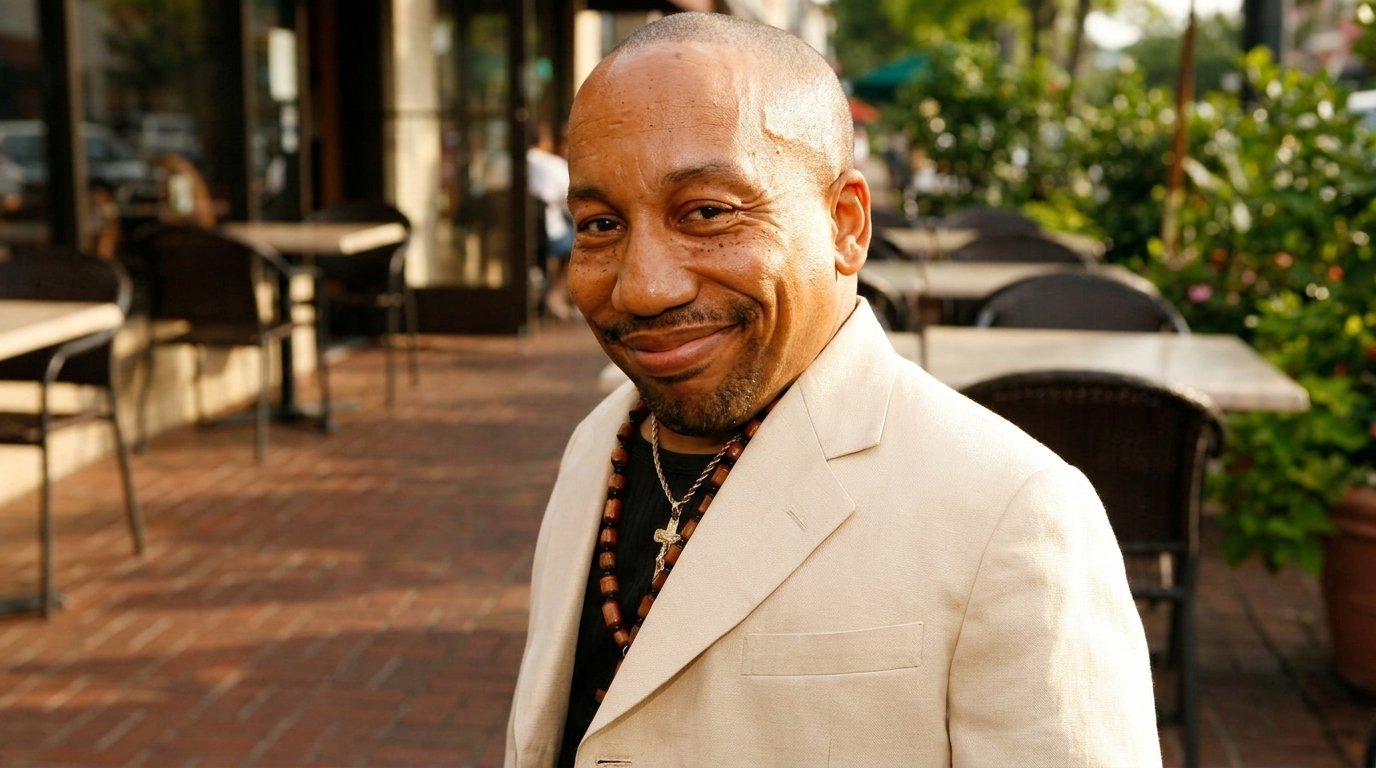
Tony Cox is an American actor best known for playing Marcus, the sharp-tongued partner in crime alongside Billy Bob Thornton in the 2003 comedy Bad Santa. During a career that stretched from the early 1980s until 2016, Cox appeared in dozens of films and television shows and worked on projects connected to filmmakers such as Tim Burton, Francis Ford Coppola, and Clint Eastwood. He is also remembered for several smaller but widely recognized roles, including appearing as an Ewok in Return of the Jedi and taking a supporting role in George Lucas’s fantasy film Willow.
Although Bad Santa eventually became the role most closely associated with his name, Cox had already spent more than two decades building a career in Hollywood before the film was released. His story includes an early interest in music, a move from Alabama to Los Angeles, years of supporting roles, and a career-defining comedy performance that introduced him to a much larger audience.
Quick Facts
| Category | Detail |
|---|---|
| Full Name | Joseph Anthony Cox |
| Known As | Tony Cox |
| Date of Birth | March 31, 1958 |
| Birthplace | New York City, raised in Uniontown, Alabama |
| Occupation | Actor |
| Years Active | 1980–2016, retired |
| Height | 3 ft 6 in (107 cm) |
| Spouse | Otelia Cox, married in 1981 |
| Children | One |
| Known For | Bad Santa, Willow, Return of the Jedi, Beetlejuice |
| Net Worth | Unconfirmed; various estimates place it between roughly $2 million and $6 million, but no verified figure has been published |
Early Life in Alabama
Tony Cox was born Joseph Anthony Cox on March 31, 1958, in New York City to Joe Cox and Henrietta Jones Cox. Although he was born in Manhattan, he spent most of his childhood in Uniontown, Alabama, where he was raised by his grandparents, Lottie and Henry Jones. His mother later moved to College Park, Georgia, with his stepfather, Rudolph “Rudy” Penn, while Cox remained in Alabama to continue his schooling. Cox has achondroplasia, a common form of dwarfism, which later influenced the types of roles Hollywood offered him, although it did not stop him from pursuing his ambitions in entertainment.
Acting was not Cox’s first career goal because music originally interested him more. By the time he was 10 years old, he had taught himself how to play the drums, and he continued developing that interest throughout his teenage years. After graduating from Robert C. Hatch High School in 1976, he enrolled at Alabama State University with plans to formally study music. The program proved difficult because he could not read sheet music well enough to keep pace with the coursework, and he eventually dropped out during his freshman year. It was around this period of his life that he met Otelia, the woman he would later marry.
Instead of remaining in Alabama after leaving university, Cox decided to move to Los Angeles and pursue acting. He has said that performers Billy Barty and Michael Dunn, two actors with dwarfism who had already established careers in Hollywood, inspired him to explore acting professionally. After arriving in California, Cox trained under De De Tillman at the Merrick Studio School of Acting, and that training gradually helped him secure small parts in commercials and television programs.
Breaking Into Hollywood
Cox’s earliest screen work during the early 1980s mainly consisted of guest appearances and smaller roles, including parts on television programs such as Buck Rogers in the 25th Century and The Greatest American Hero. His profile grew considerably when he was cast as an Ewok in Star Wars: Episode VI – Return of the Jedi in 1983. His face was not visible beneath the Ewok costume, but the role connected him with one of the biggest entertainment franchises in the world. He also became involved with the Ewok-related television movies that followed the original Star Wars trilogy.
The remainder of the 1980s brought Cox a steady collection of film roles across different genres. He played the Preacher, sometimes credited as the Minister, in Tim Burton’s Beetlejuice in 1988 and appeared as Pee Wee Marquette in Clint Eastwood’s jazz drama Bird during the same year. Cox also appeared in George Lucas’s fantasy film Willow, where he worked alongside Warwick Davis, another actor he would cross paths with several times during his career. These projects showed that Cox was steadily working on major Hollywood productions and collaborating with filmmakers who were shaping mainstream American cinema during the period.
The 1990s and Television Work
Throughout the 1990s, Cox continued finding opportunities in both comedy and drama. He had a memorable appearance on the sitcom Martin, where he played Bennie, a character who becomes involved in a conflict over a romantic dispute. He also appeared in the 1995 comedy Friday, which later became one of the most recognizable films associated with 1990s Black cinema. As the decade came to an end, Cox continued moving between television and film rather than being limited to one particular type of production.
He later appeared in the Farrelly Brothers’ 2000 comedy Me, Myself & Irene, playing a Mensa-member limousine driver who becomes involved in the chaotic story surrounding Jim Carrey’s character. While the 1990s and early 2000s are sometimes viewed as a quieter period compared with the success that followed Bad Santa, those years kept Cox active in Hollywood and allowed him to build the experience and screen presence that eventually led to his most recognizable role.

Bad Santa and Later Career
Cox’s career reached a major turning point in 2003 when director Terry Zwigoff cast him as Marcus Skidmore in Bad Santa. The film paired Cox with Billy Bob Thornton, who played a boozy and foul-mouthed department-store Santa, while Marcus served as his partner in crime. According to Cox’s own account of the casting process, the role had originally been written for a white actor, and some producers were reluctant to cast him. Zwigoff supported Cox for the role, however, and Cox later explained that Marcus offered something he rarely encountered during his career: a character with genuine depth who was not written simply as a novelty because the performer had dwarfism.
Bad Santa went on to develop a strong cult following, and Marcus became the character most closely associated with Cox’s career. The success of the film also opened the door to additional comedy roles during the mid-2000s, including appearances in parody films such as Date Movie, Epic Movie, and Disaster Movie. Cox also had a recurring role on the FX drama Rescue Me beginning in 2004 and later appeared in Disney’s Oz the Great and Powerful in 2013, where he played a character named Knuck.
Cox’s presence in popular culture was not limited to film and television. He appeared in music videos including Eminem’s “Just Lose It” and Snoop Dogg’s “From tha Chuuuch to da Palace,” allowing him to reach audiences outside traditional acting roles. In 2016, he returned to the role of Marcus in Bad Santa 2, reuniting with Billy Bob Thornton thirteen years after the original movie. Following the sequel’s release, Cox stepped away from acting, effectively bringing an end to a professional career that had lasted for more than three decades.
Personal Life
Tony Cox married Otelia Cox in 1981 after the two had originally met while he was still in high school. They have one child together and have generally kept their family life away from the attention that surrounded Tony’s acting career. Because Cox has maintained a relatively private personal life, there is little confirmed public information about the couple’s day-to-day activities or their child.
Cox’s long marriage is another part of his life that has remained mostly separate from his Hollywood career. Readers interested in other private family members connected to well-known actors.
Why Tony Cox’s Career Still Matters
What makes Tony Cox’s career notable is not simply the number of films and television programs in which he appeared, but the range of productions and filmmakers he worked with while building a career in an industry that historically offered relatively few substantial roles to actors with dwarfism. Throughout his career, Cox worked on projects connected to filmmakers including George Lucas, Tim Burton, Clint Eastwood, and the Farrelly Brothers, moving between fantasy, comedy, drama, television, and major studio productions rather than remaining limited to one category.
Cox has also spoken about how difficult it was earlier in his career to find roles that gave performers with dwarfism meaningful characters instead of using their appearance mainly for visual humor. That is one reason Bad Santa became such an important part of his career. Marcus had a genuine role in the film’s story and was written as a developed character rather than simply a background novelty. Cox has described that opportunity as an important turning point, both for his own career and for the kind of parts performers like him could receive.
FAQ
What is Tony Cox best known for?
Tony Cox is best known for playing Marcus in Bad Santa in 2003 and returning to the role in the 2016 sequel. He is also recognized for appearances in Willow, Return of the Jedi, and Beetlejuice, along with many other film and television projects.
Is Tony Cox still acting?
No. Cox stepped away from acting after appearing as Marcus again in Bad Santa 2 in 2016, bringing his acting career of more than three decades to an end.
Where was Tony Cox born?
Tony Cox was born in New York City on March 31, 1958, but he spent most of his childhood in Uniontown, Alabama, where he was raised by his grandparents.
Is Tony Cox married?
Yes. Tony Cox married Otelia Cox in 1981 after the two had known each other since their younger years, and they have one child together.
How tall is Tony Cox?
Tony Cox stands 3 feet 6 inches, or approximately 107 centimeters, tall. He has achondroplasia, which is a common form of dwarfism.
EXPLORE MORE: Laura Savoie Biography: Her Career, Marriage to Dennis Quaid, and Life

Written by Hassan, founder and editor of NTX Magazine — an independent news and biography publication. Every article is researched and cross-checked against multiple public sources before publishing; see our Sourcing Standards page for details.
