

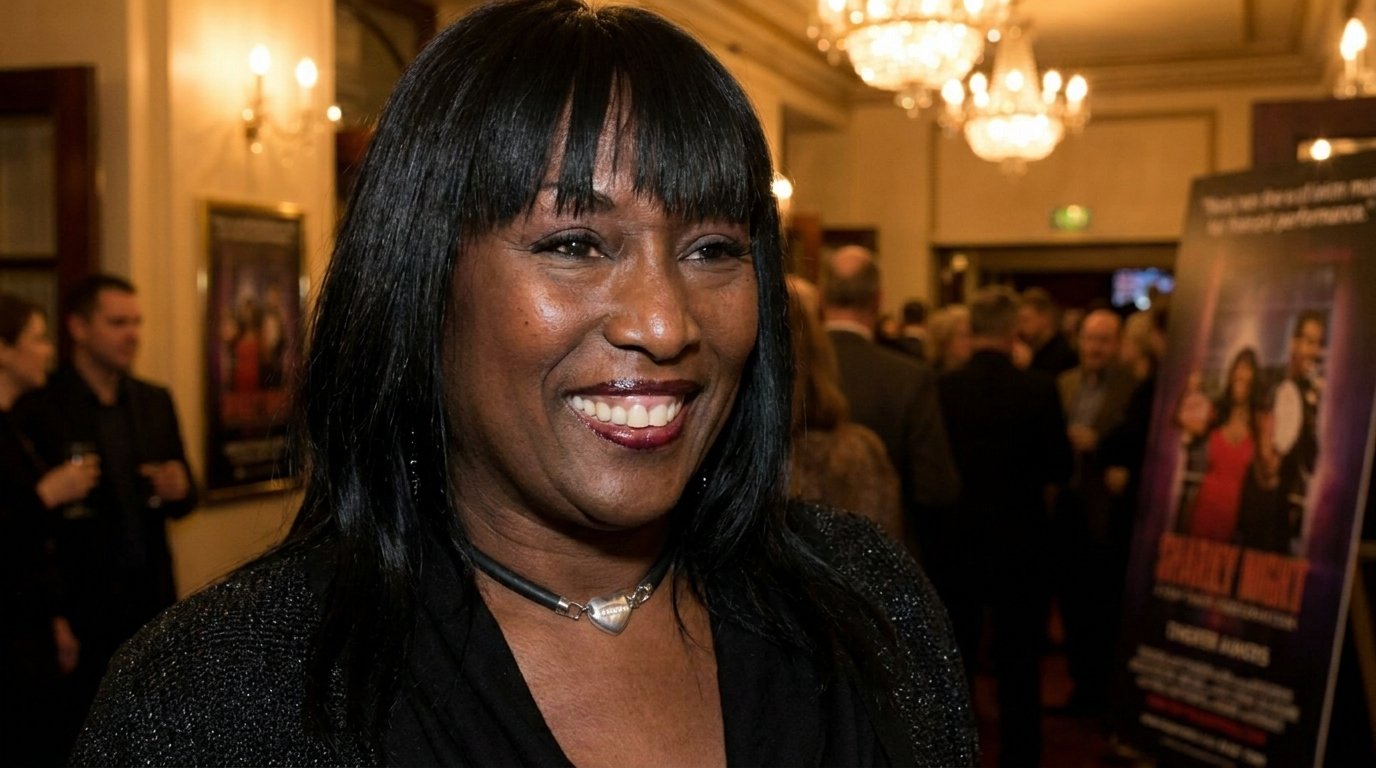
Kiki Shepard was one of the most recognizable faces on American television during the late 1980s and 1990s, thanks to her long and celebrated run as a co-host of “Showtime at the Apollo.” For millions of viewers, she was the elegant and warm presence who welcomed both rising stars and legendary performers onto one of the most historic stages in the country. Beyond her television career, Shepard built a rich life as a dancer, actress, and community advocate, dedicating her later years to supporting people living with sickle cell disease. This article takes a detailed look at her early life, her rise to fame, her television and film work, her charitable legacy, and the lasting impact she left behind.
Early Life and Education
Kiki Shepard was born Chiquita Renee Shepard on July 15, 1951, and she grew up in Tyler, Texas. Beauty pageants were among her first stages, and she danced in the chorus of Broadway shows before her breakthrough at “Showtime At The Apollo” in 1987. Her love for performance started early, and dancing became a defining part of her identity long before she ever stepped in front of a television camera.
Shepard hailed from Tyler, Texas, and earned a Bachelor of Arts in Business Administration from Howard University. While studying at the historically Black university in Washington, D.C., Shepard became a charter member of the D.C. Repertory Dance Company. During this period, she also became a proud member of Delta Sigma Theta Sorority, Incorporated, a connection she carried with pride throughout her life. Her college years combined academic study with serious dance training, which set the stage for the performing career that followed.

A Career Built on Dance
Long before television made her a household name, Kiki Shepard was already a professional performer. Shepard began dancing worldwide in 1971, touring internationally with the D.C. Repertory Dance Company. Her talent as a dancer eventually brought her to one of entertainment’s biggest stages: she performed as a dancer at the 49th Academy Awards, and her parents had been champion competitive dancers themselves, which suggests that performance ran in the family. Shepard also spent time on Broadway, where she danced in various productions for more than a decade, sharpening the stage presence that would later define her television hosting career.
Rise to Fame on “Showtime at the Apollo”
Shepard’s biggest break came in 1987, when she joined the cast of “It’s Showtime at the Apollo,” a syndicated variety show filmed live at the historic Apollo Theater in Harlem, New York. The show became known for its opening theme “It’s Showtime at the Apollo” and for showcasing both emerging and established Black entertainers in front of a famously vocal audience.
For more than 15 years, Kiki Shepard co-hosted the show, working alongside a rotating cast of talents including Steve Harvey, Sinbad, Mo’Nique, Mark Curry, Rudy Rush, Rick Aviles, and Christopher Reid. She remained part of the show from 1987 to 2002. Throughout her run, Shepard became known for her striking sense of style, and she eventually earned a nickname that stuck with her for the rest of her career. She became known as the “Apollo Queen of Fashion,” a title that reflected both her glamorous wardrobe and her polished presence on stage. Her warmth and professionalism helped her connect with performers ranging from first-time amateurs to seasoned entertainers, and audiences at home grew to trust her as a familiar and reassuring guide through each episode.
When the production later shifted, the show moved to California and was renamed “Live in Hollywood,” running for one season in 2003 with Shepard as host. This gave her the opportunity to step out from behind the co-host role and lead a program on her own, further proving her versatility as a television personality.
Acting Career in Film and Television
While hosting kept her in the spotlight, Kiki Shepard also built a steady acting career across film and television. She appeared in television shows such as “A Different World,” “Baywatch,” “Baywatch Nights,” “Lady Boss,” “Thunder in Paradise,” “NYPD Blue,” and “Family Law.” On the big screen, her film credits included “A Rage in Harlem,” “Miss Evers’ Boys,” “Dolls of Voodoo,” and “Blackjack Christmas.” These roles showed a different side of her talent, proving she was comfortable in dramatic and comedic settings alike, not just as a live television host. She also hosted TV One’s game show, “The Bid Whist Party Throwdown.
A Passionate Advocate for Sickle Cell Disease
Perhaps just as meaningful as her entertainment career was the work Shepard did off camera. Twenty years before her passing, she founded the KIS Foundation, Inc., serving as its executive director. Her commitment to this cause was deeply personal. Shepard wrote on the foundation’s website that her strong desire to combat shared grief and a sense of helplessness led her to offer her services to the Sickle Cell Disease Association of America, Inc. Through her national involvement, she was introduced to sickle cell disease families across America and connected with many patients whose bodies and minds were affected by the illness.
The KIS Foundation supported the sickle cell disease community through educational scholarships, student mentorship programs, a Crisis Care Package Backpack Program, and an annual celebrity golf classic that had reached its sixth year. Her family later said that service was her greatest passion, describing the last two decades of her life as devoted to this cause.
Passing and Lasting Legacy
Kiki Shepard passed away on March 16, 2026, at the age of 74. According to her representative, LaShirl Smith, she suffered a massive and completely unexpected heart attack in Los Angeles. Her family released a heartfelt statement describing her as a cherished sister, auntie, friend, and an unwavering advocate for those living with sickle cell disease, and they thanked the public for the outpouring of love and support they received.
Tributes poured in from across the entertainment industry and beyond. The Apollo Theater itself issued a moving statement, with President and CEO Michelle Ebanks describing her as more than a host, calling her a guiding light of The Apollo. The theater added that Kiki embodied the spirit, elegance, and excellence that The Apollo represents.
Her charity has pledged to keep her mission alive. The KIS Foundation stated that it will carry forward Kiki’s legacy of advocacy, empowerment, and care for the sickle cell community.
Conclusion
Kiki Shepard’s life told a remarkable story of talent, grace, and generosity. From her early days as a competitive dancer in Texas to becoming one of the most beloved faces in television history through “Showtime at the Apollo,” she built a career defined by warmth and elegance. Yet it was her decades of quiet, dedicated work supporting the sickle cell disease community that may stand as her most enduring gift. She will be remembered not only as the “Apollo Queen of Fashion” but as a woman whose compassion reached far beyond the stage.
Disclaimer: This article is based on publicly available news reports, official statements, and biographical sources believed to be accurate at the time of writing. It is intended for informational purposes only. Readers seeking the most current or comprehensive details are encouraged to consult original news sources or the KIS Foundation directly.
If you are interested in reading about other notable individuals and family lives, you may also find useful insights in our feature articles covering Stephanie Sarkisian and her background as well as Brianne Aron and her personal life.
EXPLORE MORE: Lynn Toler’s Husband: The Story of Eric “Big E” Mumford

Written by Hassan, founder and editor of NTX Magazine — an independent news and biography publication. Every article is researched and cross-checked against multiple public sources before publishing; see our Sourcing Standards page for details.
