


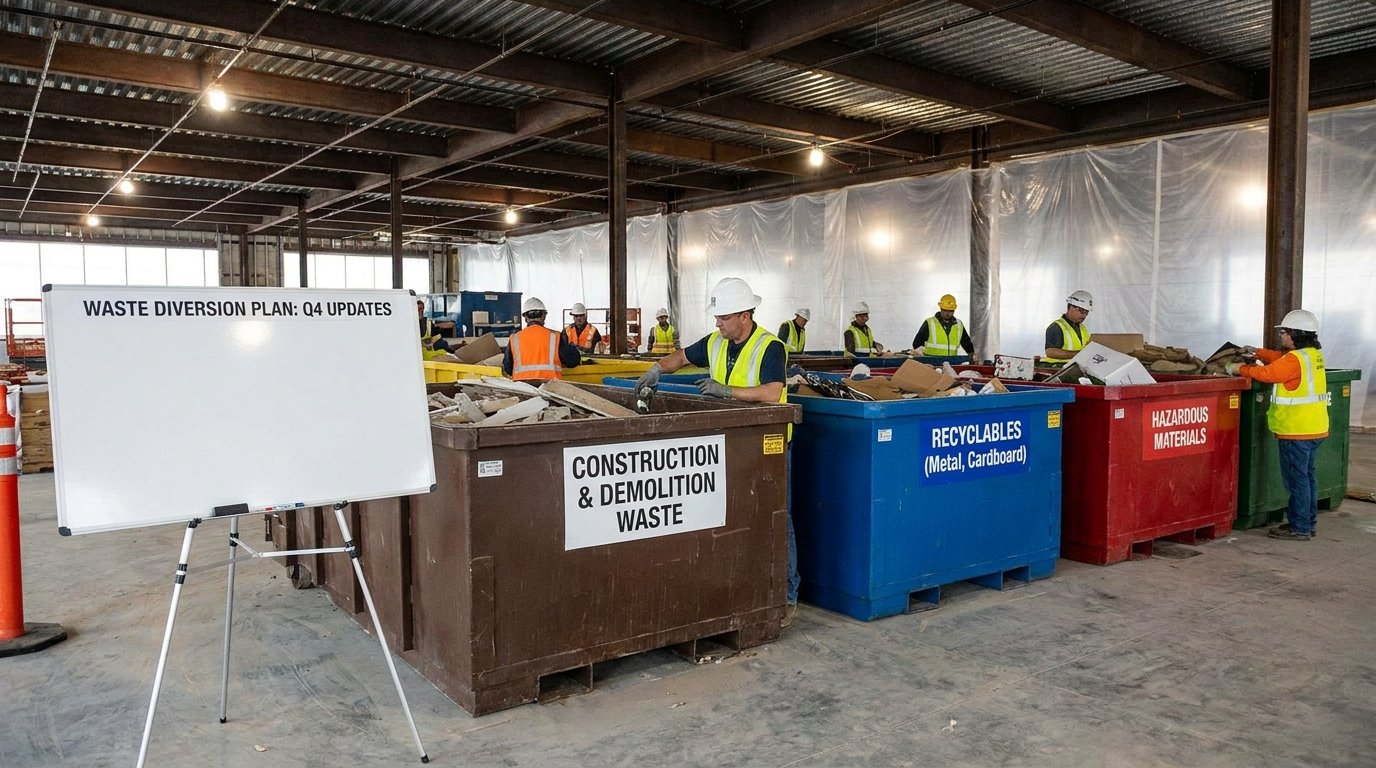
Interior improvements at commercial properties often have to happen without bringing the rest of the building to a stop. Property managers may be coordinating office renovations, tenant buildouts, lobby upgrades, flooring replacement, restroom improvements, lighting changes, or common-area remodeling while employees, tenants, customers, and vendors continue using the property.
Waste removal becomes an important part of keeping that work organized. Drywall, ceiling tile, flooring, cabinetry, fixtures, packaging, furniture, and other debris can quickly interfere with hallways, loading areas, elevators, parking, and tenant access. Commercial property managers who plan disposal alongside the renovation schedule can reduce disruption and keep work zones from spilling into the rest of the building.
Begin With the Renovation Schedule
Before deciding how waste will be handled, property managers should review which areas are being updated and in what order.
A single vacant suite may create a straightforward cleanup plan. Renovations occurring across several floors, common areas, or occupied tenant spaces require more coordination.
Identify demolition dates, material deliveries, inspections, installation periods, and expected completion dates. These milestones help determine when debris volume will increase and when dumpster service or internal cleanup may need to be adjusted.
Identify the Main Waste Streams
Commercial interior renovations can produce several types of debris at once. Common materials include drywall, ceiling tile, carpet, flooring, wood, metal framing, cabinetry, doors, trim, fixtures, insulation, and packaging.
Property managers should work with contractors to determine which materials can be handled together and which should be separated.
Metal, reusable fixtures, electronics, certain lighting components, or specialty materials may require different handling. Sorting expectations should be established before demolition so crews do not have to separate mixed debris later.
Choose a Practical Dumpster Location
Dumpster placement should support the contractors without creating unnecessary problems for tenants or building operations.
Working with Waste Removal USA can help property managers coordinate dumpster placement and service around active commercial renovation schedules. Depending on the property, an appropriate location may be near a loading dock, rear service entrance, designated construction area, or lower-traffic section of the parking lot.
The selected location should remain accessible to service vehicles and should not block fire lanes, accessible routes, or important building entrances.
Create Defined Interior Debris Routes
Once the dumpster location is established, contractors need a reliable way to move waste from the work area to the container.
Routes may include service corridors, freight elevators, stairwells, loading docks, or protected paths through common spaces. These routes should be clearly identified before demolition begins.
Whenever possible, debris movement should be separated from tenant traffic. If workers must use shared hallways or elevators, scheduling those activities during quieter periods may reduce disruption.
Protect Occupied Areas
Commercial renovations frequently occur beside businesses that remain open. Dust, noise, and debris should be contained within the construction area as much as possible.
Waste should not be staged in shared corridors, lobbies, stairwells, or near neighboring tenant entrances. Temporary piles in these areas may interfere with customers, employees, deliveries, and emergency access.
Property managers should establish boundaries for contractors and make sure debris remains inside designated work and disposal zones.
Coordinate With Building Management Operations
Waste removal should fit into the property’s normal operating schedule. Cleaning crews, security teams, maintenance personnel, delivery drivers, and building engineers may all use the same service areas needed by contractors.
Property managers should communicate renovation activity to these teams and identify any scheduling conflicts.
A dumpster pickup, major material delivery, and regular building service should not all be competing for the same loading dock at the same time if that can be avoided.
Manage Demolition Debris Early
Demolition usually creates the largest volume of waste during an interior update. Removed walls, flooring, ceiling systems, fixtures, cabinetry, and doors can fill staging areas quickly.
Contractors should move these materials out regularly rather than allowing them to accumulate inside vacant suites or common areas.
Early removal also gives crews more room to inspect walls, floors, utilities, and structural conditions before reconstruction begins.
Keep Reusable Materials Separate
Some commercial interiors contain items that may still have value after removal. Doors, shelving, cabinets, furniture, hardware, fixtures, and certain architectural components may be suitable for reuse or donation.
These items should be identified before demolition begins.
Once reusable materials are mixed with broken drywall, flooring, and general construction debris, recovering them becomes much more difficult. A designated holding area can help protect them until they are removed from the property.
Coordinate Waste with Material Deliveries
Renovation projects often involve large deliveries of drywall, flooring, ceiling systems, lighting, cabinetry, fixtures, and office components.
Incoming materials need clean staging areas. If demolition debris occupies those spaces, crews may have to move waste before deliveries can be unloaded.
Property managers should encourage contractors to complete major cleanup before scheduled material arrivals. Keeping incoming products and outgoing debris separated reduces double handling and helps protect new materials from damage.
Use Cleanup Checkpoints Between Phases
Large interior updates benefit from planned cleanup periods between major construction phases.
Useful checkpoints might occur after demolition, before rough inspections, before drywall installation, before flooring, and before final finishes.
At each checkpoint, contractors can remove debris, clear access routes, organize materials, and verify remaining dumpster capacity. These resets help prevent waste from one phase from carrying into the next.
Pay Attention to Regulatory Requirements
Commercial projects may be subject to local rules governing construction debris, container placement, hazardous materials, recycling, or site operations.
Property managers responsible for commercial construction waste management should make sure contractors understand any applicable requirements before materials are discarded.
Paints, chemicals, certain electronics, batteries, and other restricted materials should not be treated as ordinary construction waste without confirming proper handling procedures.
The project should have a clear process for identifying questionable materials rather than allowing workers to make assumptions.
Protect Elevators and Loading Areas
Multi-story properties often depend on freight elevators and loading docks for debris removal. These spaces can become bottlenecks if several contractors or tenants need them simultaneously.
Property managers may need to establish specific hours for renovation crews to use freight elevators or service corridors.
Floors, walls, and elevator interiors may also need protection from carts, drywall, metal, and other construction materials. Regular cleanup around these areas prevents debris from spreading into the rest of the building.
Monitor Dumpster Capacity
Commercial interior projects often generate waste unevenly. One week may involve heavy demolition, followed by a quieter period of electrical or plumbing work, then another increase during flooring or finish installation.
Property managers or project supervisors should monitor container capacity throughout these phases.
Scheduling service before the dumpster is completely full helps prevent contractors from creating overflow piles in loading areas or parking lots.
Maintain Service Truck Access
A dumpster cannot be removed or replaced if vehicles, pallets, equipment, or deliveries block the service route.
Commercial properties can become crowded quickly, especially when tenant parking and construction traffic share the same areas.
The path needed for dumpster service should remain protected. Before scheduled pickup, someone should verify that the route is clear and that gates or loading areas are accessible.
Plan Around Multiple Contractors
Interior renovations often involve several trades working in sequence or at the same time. Demolition crews, electricians, plumbers, HVAC technicians, flooring installers, carpenters, and painters may all generate different forms of waste.
Property managers should make sure the general contractor has established clear cleanup responsibilities.
Each trade should know whether it is expected to remove its own debris, use a shared dumpster, or stage materials for a dedicated cleanup crew. Clear expectations prevent waste from becoming someone else’s problem.
Keep Common Areas Presentable
Even when construction is visible, the rest of the property should remain as orderly as possible.
Loose packaging, drywall scraps, carpet pieces, and construction materials should not spread into tenant-facing areas. Regular cleaning of corridors, entrances, sidewalks, and loading areas helps maintain a professional appearance.
This is especially important in office, retail, medical, and mixed-use properties where visitors may be entering the building throughout the renovation.
Coordinate Final Pickup with Project Closeout
The dumpster should remain available until the last significant debris-producing work is finished. Punch-list repairs, damaged materials, packaging, and final fixture installation may continue generating waste after the main construction phase ends.
Removing the container too early can create a disposal problem during closeout.
At the same time, property managers usually want the dumpster removed before tenant move-in, reopening, final cleaning, or leasing activity resumes in the renovated area.
Conduct a Final Property Walk
Before the waste plan is considered complete, property managers should inspect more than the renovated suite.
Check hallways, loading areas, parking spaces, service corridors, elevator areas, sidewalks, and the former dumpster location. Small debris and packaging can remain even when the main construction work is finished.
A final walkthrough helps ensure the property is ready to return fully to normal operations.
Waste removal strategies for commercial properties undergoing interior updates should balance renovation needs with the continued operation of the building. Property managers must consider tenant access, shared spaces, deliveries, service routes, dumpster capacity, and the different waste streams created throughout construction.
By coordinating disposal with the renovation schedule, defining debris routes, protecting common areas, monitoring capacity, and using cleanup checkpoints between phases, property managers can keep construction waste from interfering with the rest of the property. A strong plan allows interior updates to move forward while maintaining a cleaner, more organized environment for everyone still using the building.

